Greek Natural Gas Market report | April 2026
An inside look at the Greek energy market: analyze the dual-pillar supply strategy, infrastructure utilization trends, and growing renewable energy penetration.
23 Jun 2026 3 min read
In May 2026, the Greek natural gas market reached a critical inflection point, characterized by a 20% month-over-month (MoM) surge in total NNGTS entries, rising from 5 TWh to 6 TWh. This growth is not merely a seasonal fluctuation but a strategic expansion of Greece’s role as a regional energy gateway.
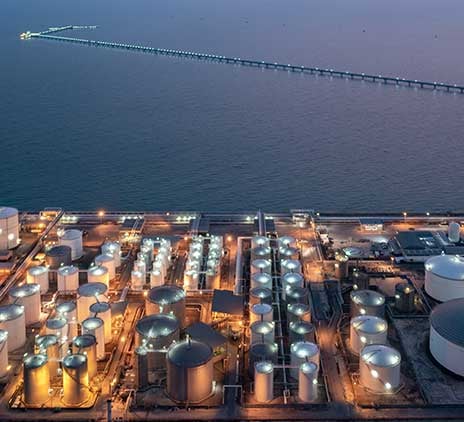
It is imperative to note that while the system is successfully absorbing higher volumes, it is currently "limping" on a single leg—the Agia Triada (Revithoussa) terminal—due to the planned maintenance of the FSRU Alexandroupolis. This heightened reliance on Revithoussa occurs immediately following a period where FSRU-based imports had tripled year-over-year (from 1 TWh to 3.4 TWh), underscoring the vital necessity of diverse infrastructure to sustain the market's current trajectory.
The current supply mix reveals a strategic pivot toward pipeline dominance for the month, though the underlying geopolitical risk remains high. The heavy reliance on the Sidirokastro entry point—accounting for over three-quarters of pipeline flows—highlights the ongoing challenge of phasing out Russian gas. However, from the ~3.2TWh imported in Sidirokastro entry point, 44% were exported, with the remaining 56% accounting for domestic consumption. This allocation of quantities indicates that domestic needs are mainly covered by other routes rather than Russian gas.
The allocation of the ~6 TWh of total gas exiting the system highlights a bifurcated market. While "Total Exits" reached 6 TWh, "National Consumption" accounted for 4.6 TWh, with the remainder driven by a massive surge in regional exports.
Critically, the 11% YoY growth in industrial use (reaching 369 activated users) was the sole reason the distribution level showed any YoY growth (+4%). This growth successfully offset a stagnant residential sector. Despite the activation of 27,138 new Points of Delivery (PoDs)—a 4% increase in the consumer base—residential consumption remained flat at 3,688 GWh as high inflation continues to contain household demand.
Consumption remains geographically concentrated, with Attica (24%) and Central Greece (20%) serving as the primary demand hubs. The strength of Central Greece is directly tied to its stable regional industrial base, while Attica’s dominance is being reinforced by new infrastructure.
The most significant strategic takeaway is the 127% MoM surge in exports (reaching 1.4 TWh), and a staggering 265% YoY increase (totaling 8 TWh). This transition, mandated by EU Regulation 2022/1032 for storage injection, transforms Greece into a regional energy security provider. The infrastructure foundation—evidenced by the 27k+ new PoDs and expanded industrial connections—is now in place to drive the next heating season’s demand.
Subscribe here to receive our newsletters




An inside look at the Greek energy market: analyze the dual-pillar supply strategy, infrastructure utilization trends, and growing renewable energy penetration.

Greece’s battery energy storage (BESS) market is moving rapidly from policy ambition to strategic necessity.


Among the most defining episodes in this history is the 1973 oil crisis, that reshaped energy policy, economic planning, and international relations.
